

Going to a sports collectibles event with your family is exciting for everyone. The thrill of the hunt and colorful displays make memories last. Finding that special piece is always a highlight.
But here’s the best part: you don’t need a lot of money to enjoy it. With a smart plan and clear goals, you can have a great time without spending too much.
This guide will show you how to plan and have fun at the event. We’ll cover preparing before you go and smart tactics on the event floor. You’ll also learn how to get kids involved and keep your new treasures safe.
The key to success is setting a clear spending limit. Make a “wishlist” of your favorite players, teams, or sets before you go. This helps you avoid buying things on impulse and ensures you get items you really want.
Smart budget collecting means having fun without spending too much. Let’s see how your family can do it well together.
Plan Your Budget and Wishlist
Before you go to the SWFL Sports Card Show, set a budget. This makes the day fun and smart for your family. It turns the hunt into a strategic adventure.
Decide how much you can spend together. Be honest about your budget. This helps avoid overspending and teaches kids about money.
Then, split your budget into smaller parts. Give each family member or goal its own money. This makes the hunt more focused and personal.
| Budget Category | Sample Allocation | Goal |
|---|---|---|
| Dollar Box Hunting | $20 | Find hidden gems and complete sets |
| Star Player Target | $30 | Acquire one specific card in good condition |
| Kid’s Choice Fund | $15 per child | Allow independent, budgeted purchases |
| Supplies & Protection | $10 | Buy sleeves or toploaders for new finds |
With your budget set, make a wishlist. Look up card values online. Discuss what each person wants to find. This turns vague wishes into a clear list.
A good wishlist has both dream cards and achievable goals. Knowing a card’s price helps you find deals. It stops you from paying too much in the excitement.
Dollar boxes are your best friend. These large boxes have every card for $1. They’re perfect for budget-friendly hunting.
Having a budget and list makes hunting through boxes efficient. You can quickly find your wishlist items. Your “dollar box” fund lets you buy many cards without overspending.
Teach kids to look for their wishlist players first. Finding a wanted card for $1 is a big win. It makes the hunt exciting and stretches their budget.
Planning and listing saves time and money. You avoid buying things you don’t need. Your family leaves happy, with cards you wanted, and within your budget.
Where Value Hides: dollar boxes, local heroes, sets
Looking for great deals? The SWFL Sports Card Show is the place to be. Three areas are key for finding amazing values. You can grow your collection without breaking the bank.
Start with the dollar boxes. These are filled with cards for just a dollar. Vendors use them to clear out common items fast. For you, they’re a treasure trove.
Exploring these boxes can lead to rare finds. You might find rookie cards, vintage pieces, or inserts. The condition may vary, but the possibilities are endless. Always check comps on your phone to see if a card is worth more.
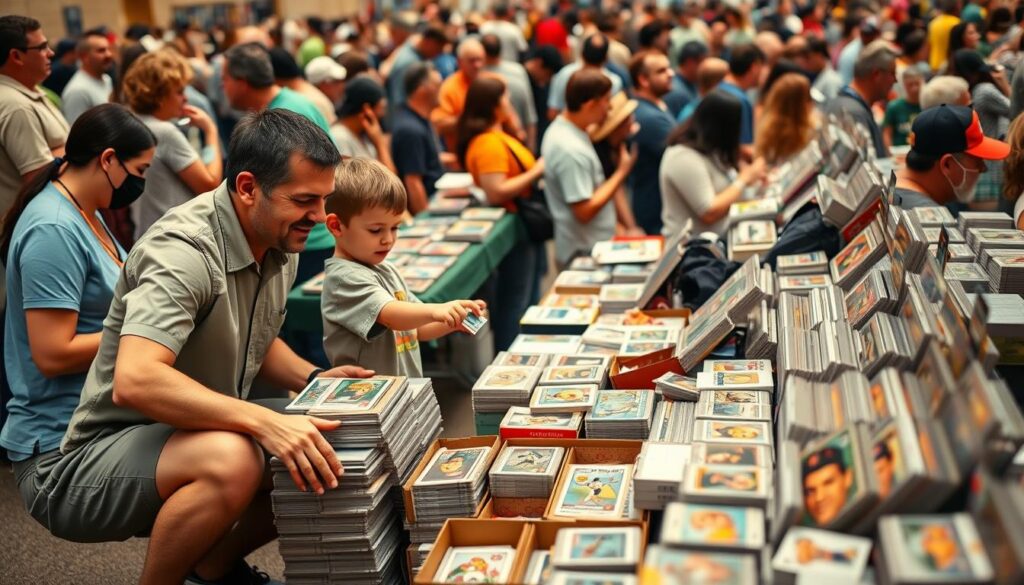
Next, look for local heroes. These are players from Florida teams like the Rays and Buccaneers. Local fans often have duplicates, making them cheaper at the show.
For example, a Randy Arozarena card might cost less here than online. Use comps to find the best deals. Supporting local players adds a personal touch to your collection.
Lastly, aim to build a complete set. This is a fun and affordable project. You can find all the common cards from a specific year and brand.
Vendors often sell these cards in bulk for a low price. Completing a set teaches patience and gives you a beautiful display. Before buying, check prices to make sure you’re getting a good deal.
| Value Spot | Target Finds | Budget Benefit | Quick Comp Check |
|---|---|---|---|
| Dollar Boxes | Rookies, vintage, odd inserts | Potential 5x-10x return on $1 | Search recent sold listings for the exact card. |
| Local Heroes | Rays, Marlins, Bucs, Panthers players | Lower local premium than online | Compare show price to major marketplace average. |
| Set Building | Common cards from one year/brand | Bulk discounts create a complete project | Add up individual card values vs. lot price. |
Your best tool is knowing comps. This knowledge turns you into a smart buyer. It helps you spot good deals instantly. This skill makes the hunt fun and rewarding for everyone.
Teach Kids to Comp Prices: simple steps and safety
Teach your young collector how to compare prices in a fun way. The card show floor is a great place for this. It’s a chance to learn about making smart choices.
“Comping” prices means checking what others charge for similar cards. It’s a key skill for collectors. For kids, keep it simple and visual to keep them interested.
Here are some easy steps for kids:
- Use a Price Guide App: Let your child use your phone to search for a player’s name. Show them how different cards have different prices. This makes learning fun.
- The Side-by-Side Game: Find two tables with similar cards. Ask your child to notice the price, condition, or sticker color differences. This improves their observation skills.
- Set a “Magic Number”: Agree on a spending limit per card, like $5 or $10. If a card costs more, they must find a cheaper one or move on. This teaches budgeting.
While learning, safety is key. A crowded place needs clear rules. These rules make the day fun and safe for everyone.
Follow these safety rules from the start:
- Designate a Meeting Spot: Choose a visible booth or landmark. Tell your kids: “If we get separated, go here and stay put.”
- The “In Sight” Rule: Young children must stay in your sight. For older kids, set clear boundaries they can’t cross without asking.
- Supervise All Interactions: Always be there when your child talks to vendors or other collectors. You can show them how to ask questions and understand deals.
For a great first trading experience, look for the kids’ table. Many shows have areas for young collectors. These places have affordable items like common cards and packs.
It’s a safer, welcoming space for them to practice comparing prices. Trading at a kids’ table boosts their confidence and makes the hobby more enjoyable.
Storage & Supplies: must‑haves under $25
Protecting your budget-friendly finds is key. A simple supply kit is a must. It acts as a safety net for your new cards. Good storage starts the moment you buy a card, keeping its condition and value safe.
For less than the cost of a single blaster box, you can get a complete starter kit. This kit covers everything from common cards to your best pulls. Let’s look at the essentials.
Here’s a quick guide to basic supplies every family should have at the card show. Prices are typical for a show vendor or local hobby shop.
| Supply Item | What It Does | Est. Price |
|---|---|---|
| Penny Sleeves (100-pack) | Thin plastic sleeves that are the first layer of defense. They prevent surface scratches and are perfect for every card you buy. | $2 – $4 |
| Top Loaders (25-pack) | Rigid plastic holders for your better cards. They offer crush protection and are a must for any card you plan to trade or keep safe. | $5 – $8 |
| Card Box (Long or Short) | A sturdy cardboard box to organize and transport your sleeved cards. It keeps everything in one place and prevents bending. | $3 – $6 |
| Team Bags (100-pack) | Small resealable bags. Use them to seal a top loader, or to group a few penny-sleeved cards together. They keep dust out and cards from sliding. | $3 – $5 |
Carry this kit in a backpack. When you buy a card, sleeve it immediately. For special finds, slide the sleeved card into a top loader and seal it in a team bag. This whole process takes seconds but makes a huge difference.
This is a fantastic, hands-on lesson for young collectors. It teaches them that a card’s value is tied directly to its condition. Proper storage is a non-negotiable part of the hobby. Showing them how to care for a $1 card builds habits that will protect a $50 card later.
With these supplies, your entire family can enjoy the show knowing your purchases are secure. This simple investment protects your budget and makes the ride home stress-free. For more ideas on displaying or organizing your collection after the show, you can share your haul and see other collectors’. Building a collection is a journey, and it all begins with safe storage.
Trade Etiquette for Families
Learning the trade can make a card show visit exciting for everyone. Swapping cards is key to the collector’s experience. It builds community and lets everyone join in without spending money.
Good manners make these moments enjoyable for all. Teach your kids some basic rules before starting.
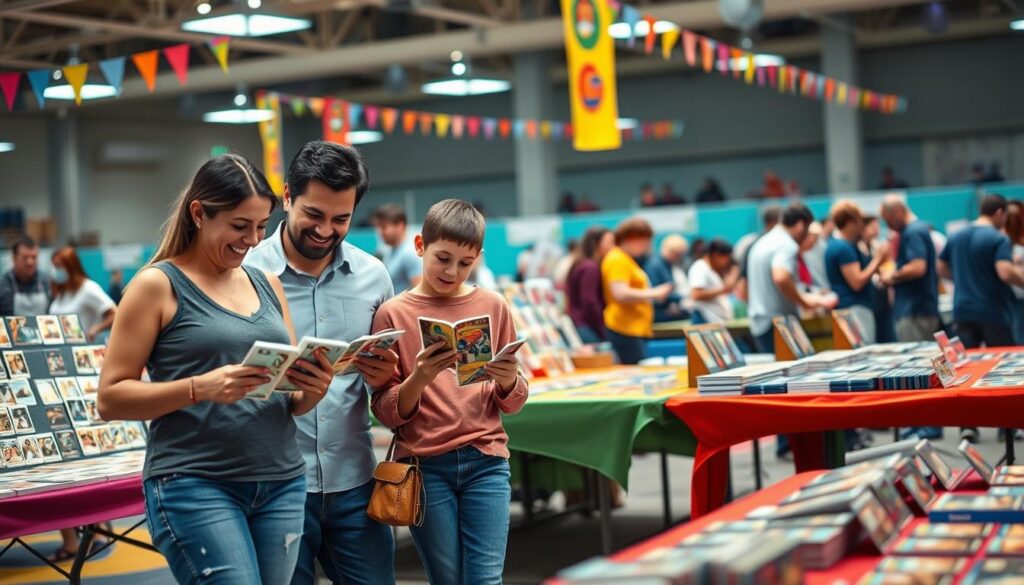
Always ask before touching another person’s cards. This is the most important rule. Saying, “May I see that card, please?” shows respect. It also helps avoid any damage.
When talking about trades, be polite and clear. It’s okay to say no. Teach kids to say, “I like your card, but I don’t think I want to trade this one for it.” This is a polite way to say no.
Parents should watch from a short distance. Step in only if your child seems unsure or if the other trader is an adult. Let kids learn to handle social situations.
Only trade cards you are truly willing to part with. Sort through your collection at home and pick out “trade bait.” These are duplicate cards or items you no longer need. Bringing a small box of trade bait gives kids power and options.
Here is a quick guide to good and bad practices during trades:
| Do This | Avoid This | Why It Matters |
|---|---|---|
| Ask permission before handling any cards. | Grabbing cards without asking. | Prevents damage and shows respect for other collectors’ property. |
| Use clear, polite phrases to offer or decline a trade. | Being vague or saying a card is “bad.” | Keeps the conversation friendly and avoids hurt feelings. |
| Bring dedicated “trade bait” cards you don’t mind losing. | Trading a card you might regret losing later. | Ensures the fun of the trade doesn’t lead to disappointment at home. |
| Parents supervise but let kids lead the conversation. | Parents doing all the talking for their child. | Helps children build confidence and learn negotiation skills. |
The goal of these trades is to have fun and connect with other fans. A successful trade isn’t just about getting a card of equal value. It’s about the smile on your child’s face after a friendly exchange.
Remember, the sports card community thrives on these positive interactions. Good manners today help ensure the show remains a welcoming place for families tomorrow.
Protect Your Finds on the Ride Home
The excitement of the SWFL card show doesn’t end when you leave the venue. Your new cards need a safe trip home. Protecting your investment from accidental damage is key.
Use a small, rigid container for transport. An empty card storage box from BCW or a plastic container works perfectly. This prevents cards from bending in bags or pockets. Place your finds in this box before you get in the car.
Keep the container in a cool, shaded spot inside your vehicle. Direct sunlight and summer heat in Florida can warp cards and fade colors. Never leave your collection in a hot car.
Secure the box so it does not slide around. Place it on the floor or in a seat with a seatbelt. Make sure it is not under groceries or other heavy items.
Following these simple steps completes your strategy. A true SWFL card show on a budget is about smart planning, family fun, and proper care. Now your collection is ready to be enjoyed at home.